

Compact 3U rack battery
Professional storage.
Made to fit the rack.
PowerCornet 5 packages 5.12kWh of LiFePO4 storage, active balancing and multi-protocol communication into a compact 3U 19-inch module.
Rack-native design
A compact module for serviceable energy storage.
The 3U enclosure is designed around standard 19-inch battery racks. Each module stays accessible for inspection and replacement, making it easier to build a tidy system without committing to one large cabinet.
- 51.2V 100Ah LiFePO4 module
- 3U steel enclosure for 19-inch racks
- 50kg module with front service access

Installer-friendly interface
Power, protection and communication on the front panel.
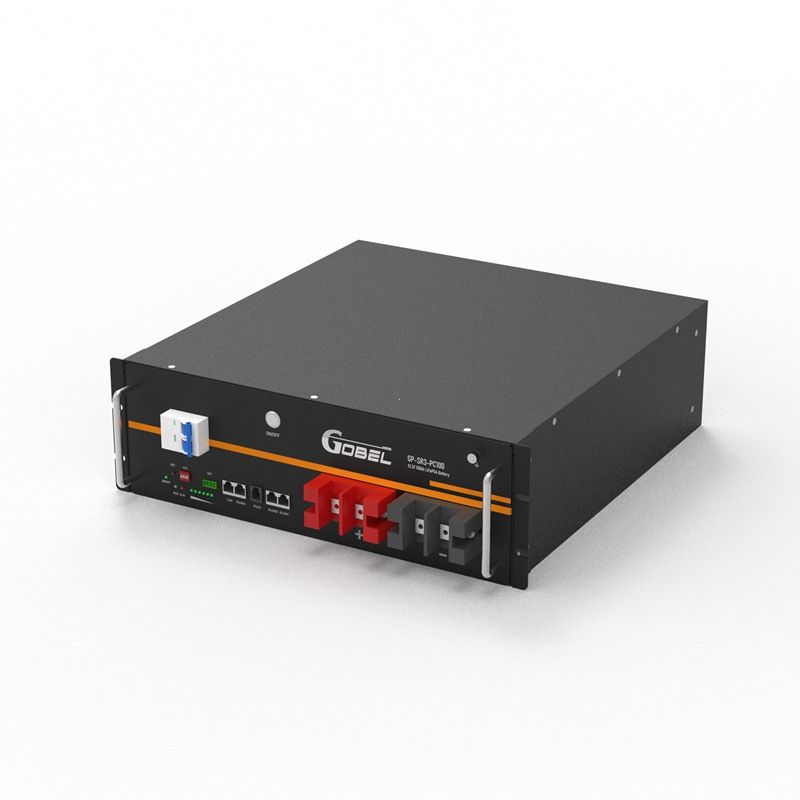
The front-facing layout keeps the main DC connections, circuit protection and communication ports visible inside the rack. This supports cleaner commissioning and faster access during maintenance by qualified technicians.
- Integrated DC circuit breaker
- CAN, RS485, RS232, Wi-Fi and dry-contact support
- Clear positive and negative power connections
Space efficiency
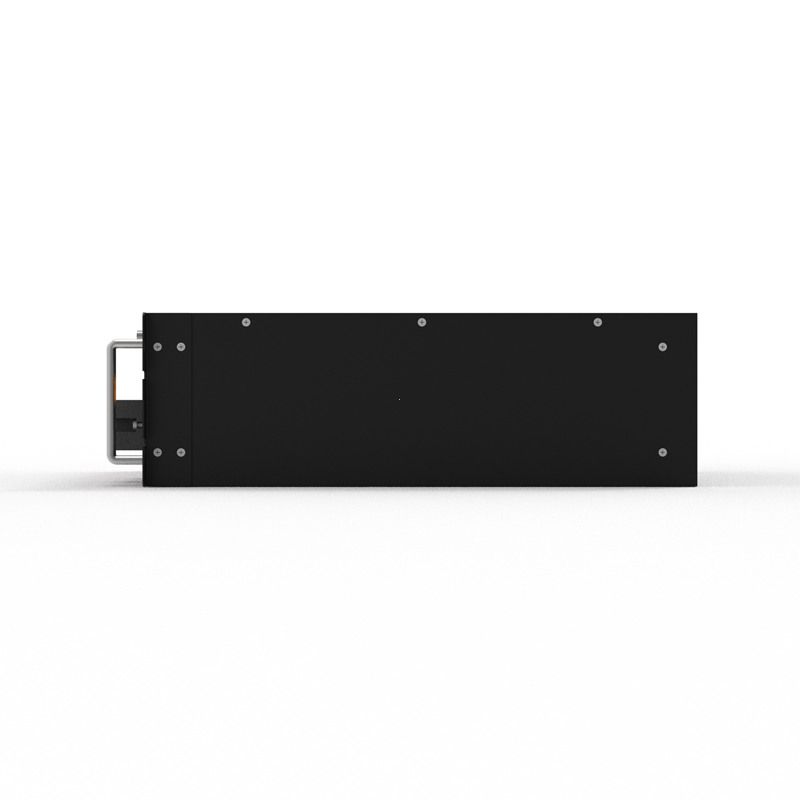
Only 148mm high, with full battery intelligence inside.
A low 3U profile lets multiple batteries share a rack with system protection and communications hardware. Passive cooling keeps operation quiet and removes the need for routine fan maintenance.
- 148mm module height
- Fanless passive cooling
- IP21 enclosure for protected indoor locations
Modular system design
Start at 5.12kWh and expand with matched modules.
Supported parallel operation allows a system to grow as energy requirements increase. A complete design should reserve rack space and account for busbars, cable sizing, overcurrent protection, communication and inverter limits.
- Up to 16 supported units in parallel
- Up to 81.92kWh nominal energy at 16 units
- Suitable for solar self-consumption, backup and off-grid systems

Plan the rack
Dimensions that simplify project layout.
Accurate mechanical planning matters as much as electrical compatibility. Allow space for the 3U module, rack rails, DC cable bends, ventilation clearances and safe service access.
- 148 × 449 × 510mm enclosure
- Standard 19-inch rack planning
- Confirm rack depth and rail support before installation

Where it fits
A modular building block for rack-based solar storage.
PowerCornet 5 is a compact choice for homeowners and installers who want to begin with one 5.12kWh server rack battery and retain a clear expansion path. The 3U format fits standard 19-inch racks and keeps each battery module accessible for service and system growth.
Buyer’s guide
Start with 5.12kWh and scale deliberately.
A single PowerCornet 5 can support a focused backup plan, while multiple modules can build a larger battery bank. The right quantity depends on both energy demand and inverter power, not on a fixed battery count for every home.
Define the first-stage load
List the essential circuits and their operating hours. One 5.12kWh module may suit a compact critical-load system; longer backup windows can require additional modules.
Check the power path
Each module is rated for 5.12kW continuous output. Confirm the inverter’s battery current, DC protection and cable design, particularly when several modules operate in parallel.
Reserve rack and busbar capacity
Plan rack units, ventilation, cable routing, isolation and equal-length connections before expansion. PowerCornet 5 supports up to 16 units for 81.92kWh nominal capacity.
Technical details
The numbers behind the system.
Core specifications for system planning. Confirm inverter settings and final configuration with your installer before commissioning.
- Model
- GP-SR3-5K
- Chemistry
- Prismatic LiFePO4, 16S1P
- Voltage / capacity
- 51.2V / 100Ah
- Nominal energy
- 5.12kWh
- Continuous / peak current
- 100A / 130A for 25 seconds
- Continuous / peak output
- 5.12kW / 6.66kW
- Cycle life
- 6,000+ cycles to 70% EOL
- BMS
- JKBMS JK100
- Communication
- CAN, RS485, RS232, Wi-Fi, dry contact
- Parallel connection
- Up to 16 units / 81.92kWh
- Dimensions
- 148 × 449 × 510mm
- Environment
- IP21 indoor; fanless cooling
Solar battery knowledge
How server rack batteries simplify expansion.
Why 3U matters
Rack units define enclosure height in a standard 19-inch rack. PowerCornet 5 uses 3U, allowing installers to estimate rack space accurately and organize batteries, protection and communications in a serviceable layout.
What 51.2V 100Ah means
Voltage multiplied by amp-hours gives nominal watt-hours: 51.2V × 100Ah equals 5.12kWh. This relationship explains why many 48V solar batteries use a 51.2V nominal LiFePO4 pack.
Why every parallel module must be planned
Parallel expansion increases total storage, but good current sharing depends on consistent cable resistance, approved protection and correct BMS communication. A battery rack is a system, not just a stack of independent boxes.
A precise fit
A 5kWh rack battery made for modular storage.
PowerCornet 5 is designed for searches such as 5.12kWh server rack battery, 51.2V 100Ah LiFePO4 battery and 3U solar battery module for a 19-inch rack.
It is a practical building block for residential battery backup, off-grid solar storage and modular 48V energy systems that need CAN/RS485 inverter communication and straightforward future expansion.
Plan your system
Tell us what you want to power.
Share your inverter model, available space and target backup time. Our team can help you identify the right battery configuration.
Discuss your project